Client project
Luxury interior design
Beverly Hills Luxury Interiors
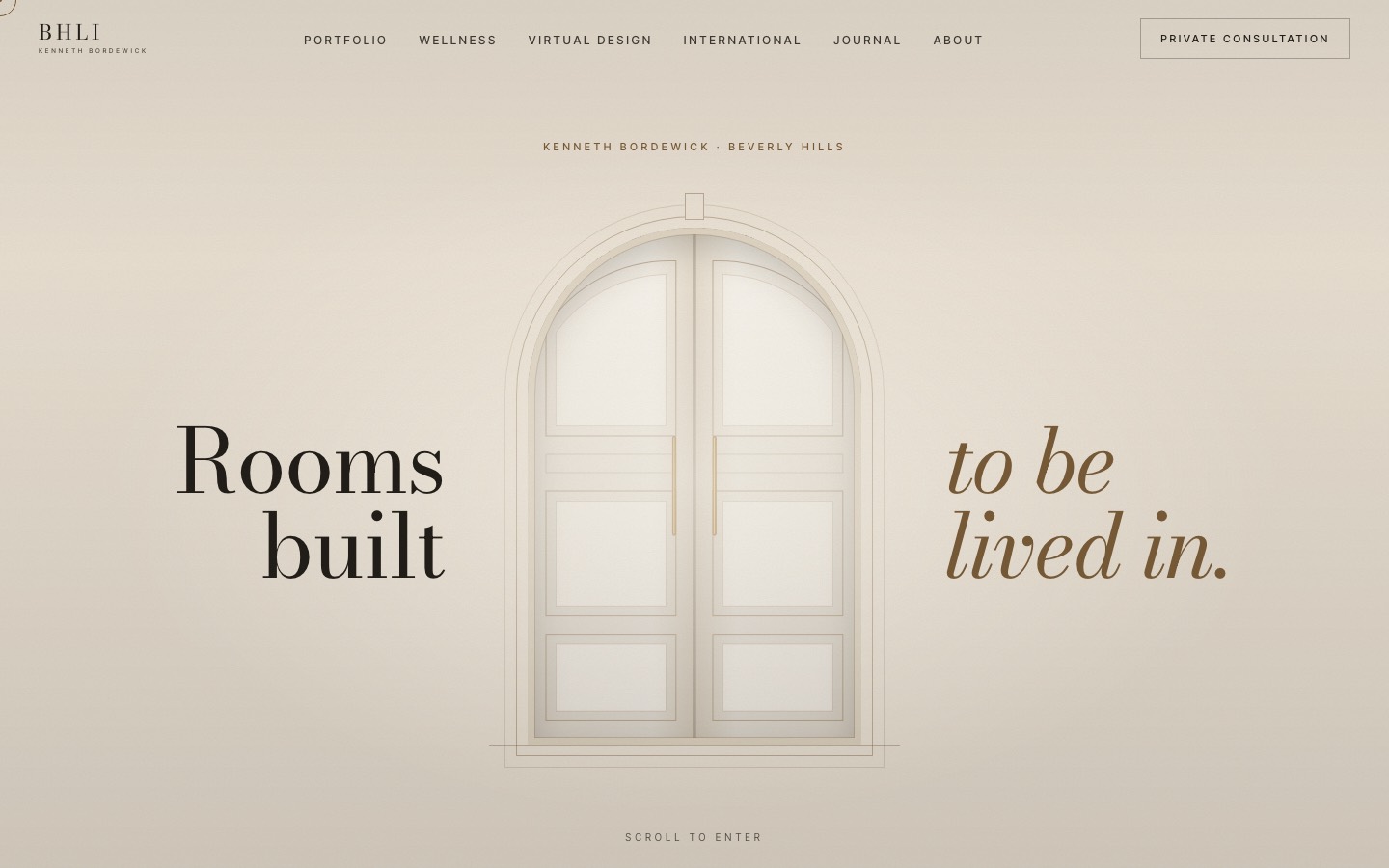
A full rebuild of a Beverly Hills interior designer's website: 318 pages, every old URL carried over, and a homepage that walks you through a door and into the work.
An interior design website has one job: make the right client feel your work is meant for their home, then make it easy to start a conversation. We design and build websites for interior designers and design studios that show projects at the size they deserve, load fast on a phone, rank for the searches local clients make, and end in a booked consultation rather than a polite scroll.
Recommended: Business $799
The essentials
Your photos are the product. They need to fill the screen and still load in a second or two on mobile data, which means modern image formats and images sized for every screen.
A client wants to know what the brief was, what was hard and what changed. A short story per project sells your thinking, not just your taste.
A consultation booking, a WhatsApp button and a short form. Three easy doors in, with no long questionnaire before anyone has spoken to you.
People search for an interior designer in a city or for a service like kitchen design. Each of those needs a real page, not one line on the homepage.
Full service, renovation direction, e-design or a one-off consultation. Explaining your process filters out the wrong clients before they book.
Most designer sites we review make the same handful of mistakes. The portfolio is a grid of small thumbnails that open into a lightbox with no words. The homepage leads with a mission statement instead of a room. The contact page asks for a budget, a timeline and a full address before someone has decided they like you. And the images are so heavy that the first impression on a phone is a blank grey box.
None of this is about taste. The work itself is usually excellent. The problem is that the site makes a prospect do the work of imagining what it would be like to hire you, and most people will not. They close the tab and go back to the next result on Google or the next account on Instagram.
A good site removes that effort. It shows a finished room within the first scroll, tells you in one sentence who the studio is for, and keeps a way to start a conversation in reach on every page.
A project page that converts has a shape. It opens with the strongest photograph at full width. A short paragraph sets up the brief: who the client was in general terms, what they wanted and what made it difficult, whether that was a dark ground floor, a listed building or a family that needed a formal room to survive children.
Then the photos run in an order that walks through the space, with a caption on the details that took real decisions: the stone, the joinery, the lighting plan. If you have before photos, one honest before image does more than ten after shots. Close with the services involved and a line inviting a consultation for a similar project.
This structure also helps search. Each project page becomes a page Google can rank for searches like a Spanish revival kitchen remodel or a modern farmhouse living room, which brings in people who are already looking at exactly the kind of work you do.
Most of your clients start with a search that includes a place: interior designer in Pasadena, luxury interior design Los Angeles, kitchen designer near me. To show up, Google needs to understand where you work and what you do, and it gets that from a few specific places.
First, a complete Google Business Profile that links to your site, with the same name, address and phone number on both. Second, a page for each core service and, if you work across several areas, a page for each area you genuinely serve, written for that area rather than copied with the town name swapped. Third, structured data on the site that tells search engines you are a professional service business with a location and a service area.
The less obvious factors matter too. Every image needs descriptive alt text, which helps both accessibility and image search. Pages need to load quickly on mobile, because Google measures that directly. And mentions from design press, showhouse features or supplier pages that link back to you count as votes of confidence. We set up the technical side as part of every build and show you how to keep the rest going.
The highest-value moment on your site is the end of a project page. Someone has just looked at a room they love. That is where the booking button needs to be, not tucked away in the footer.
We build consultation booking straight into the page: the visitor picks a service and a date that suits your diary, and the request reaches you with everything you need to reply. For clients who would rather talk first, a WhatsApp button opens a chat with a message already written, so the hardest part of reaching out, knowing what to say, is done for them.
Qualifying questions still matter, but they belong after the first contact. Ask about budget and timing once someone has shown interest, not as a gate in front of the conversation. Studios that move the long questionnaire to the second step usually see more enquiries and better conversations, because the people who reach out have already decided they like the work.
High-end studios often want motion: slow reveals, a slideshow, a scroll scene that walks through a room. Done well it signals craft. Done badly it makes a site feel sluggish on the phone where most first visits happen.
We plan motion like a budget. The homepage gets one or two signature moments. Everything else is calm. Heavy scenes get a lighter mobile version, and visitors who have reduced motion switched on see still frames that tell the same story. The result looks expensive and still loads fast, which is exactly the impression you want a prospective client to have of your own work.
Recommended structure
A starting point we adapt to your business. Every page earns its place by answering a question your clients actually ask.
Examples in this industry
Luxury interior design
A full rebuild of a Beverly Hills interior designer's website: 318 pages, every old URL carried over, and a homepage that walks you through a door and into the work.
Luxury interior design
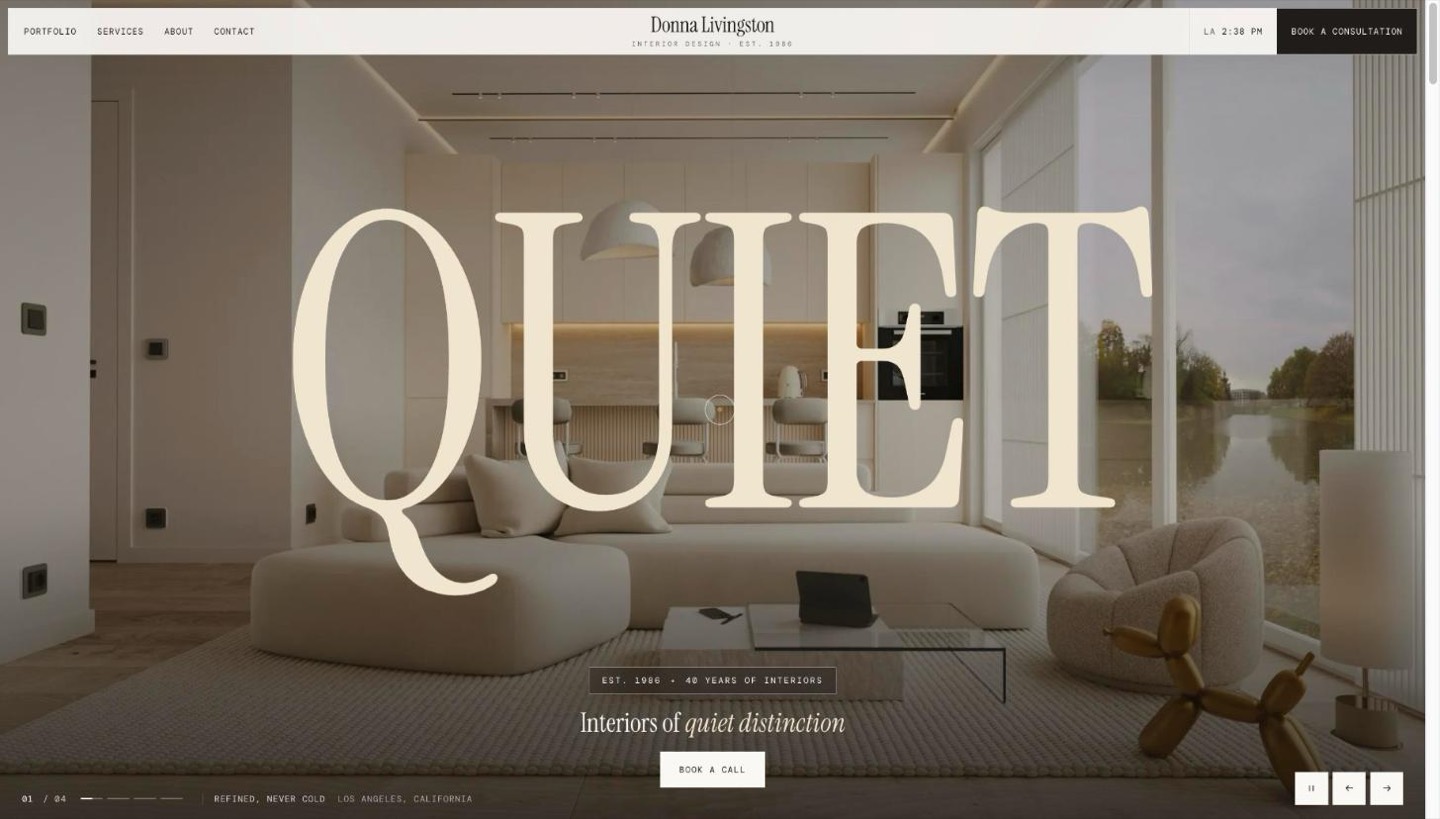
A single-page site for a Los Angeles interior design studio that moves from one striking first impression to a booked consultation without a wasted section.
Packages
Most studios start with Business: separate pages for services, projects and the studio, with local SEO and booking set up. If the website itself needs to signal premium pricing, with scroll scenes and a fully custom design like our Beverly Hills project, Signature is the right fit.
$299
One-off · Live in about 7 days
New businesses, single-service companies and local trades that need to look real online fast.
Not included: Writing your copy from scratch (we edit what you send); Domain and hosting fees.
Start Launch on WhatsAppRecommended
$799
One-off · Live in about 14 days
Service businesses that need separate pages for services, work and the team so Google and buyers can find each one.
Not included: Domain and hosting fees; Paid stock photography.
Start Business on WhatsApp$1,499
One-off · Live in about 21 days
Product brands launching on Shopify or moving off a store that isn't converting.
Not included: Shopify subscription and paid apps; Product photography.
Start Shopify Store on WhatsAppFrom $2,999
One-off · Live in 4 to 6 weeks
Studios and premium brands where the website itself has to signal the price of the work.
Not included: Domain and hosting fees; Photo or video shoots.
Start Signature on WhatsAppOur Launch package is $299 for a one-page site. Most interior designers choose Business at $799, which covers up to six pages with projects, services, local SEO and booking. Fully custom studio sites with scroll scenes start at $2,999.
Yes. We optimise your existing photography so it loads fast without losing quality. If a project is missing key shots, we will tell you which ones would make the biggest difference before you book a photographer.
A builder can work for a first site if you are happy to maintain it yourself. Studios usually move to a custom build when they want faster image loading, layouts that do not look like a template and full control over how each page is set up for search.
We build every site with the technical foundations Google looks for: service and area pages, structured data, fast loading and clean URLs. Where you rank also depends on competition in your area, your Google Business Profile and reviews, so we will be honest about what to expect.
Yes. You own the domain, the content and the code. If you ever want to move it to another developer or host, you can.
A Launch site is live in about seven days, Business in about fourteen and Signature in four to six weeks. The main thing that changes the timeline is how quickly we receive photos and copy.
Message us on WhatsApp with your business name and what the site needs to do. Packages from $299, prices published, and you own everything we build.